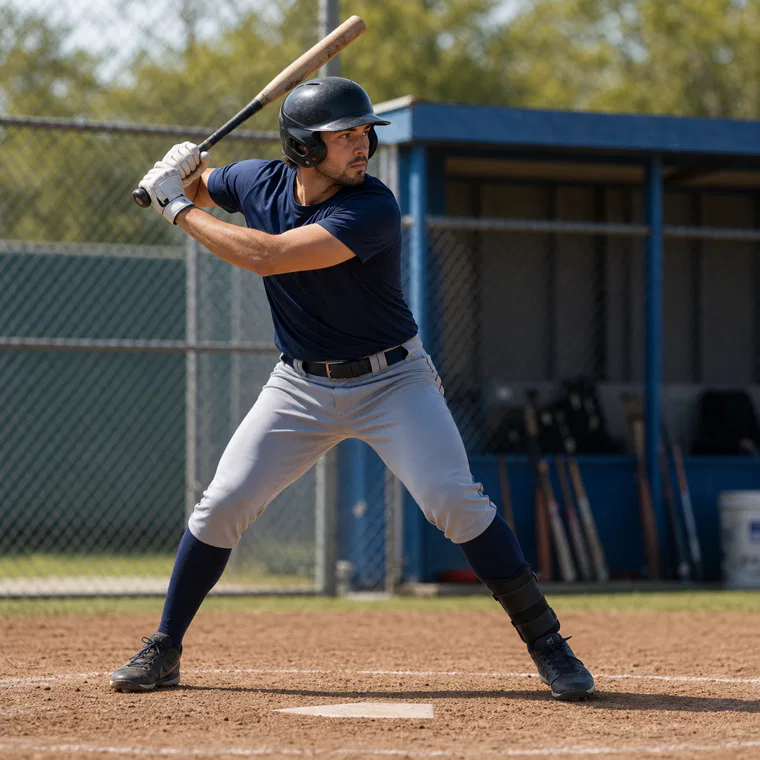
Step 1
Turn sideways
Do this: Turn sideways by rotating the shoulders and hips before the arm or bat, glove, or throwing hand travels, then keep the motion connected through the target line. Check it: At preparation, your chest or lead shoulder should already be turned toward the base, zone, or teammate, not still square and late.
Why it works: Early body turn creates usable power and keeps the arm from taking over too late.
Key cue: Organize glove, throwing hand, or bat path early so the body can move through the ball instead of reaching late.
Make it harder: Start with slow shadow reps, then add the baseball only when setup feels repeatable.
Step 2
Step to target
Do this: Step to target with short adjustment steps on the field; arrive before the baseball or opponent cue, plant lightly, and keep the head level through the direction change. Check it: After the movement, hold the position for one count before recovering.
Why it works: Footwork creates the spacing for the skill, which is why balanced contact usually starts before the ball arrives.
Key cue: Organize glove, throwing hand, or bat path early so the body can move through the ball instead of reaching late.
Make it harder: Start with slow shadow reps, then add the baseball only when setup feels repeatable.
Step 3
Throw overhand
Do this: Throw overhand by stepping through the target line, keeping the eyes level, and sending the baseball from the body rather than steering late with the hands. Check it: The base, zone, or teammate should be reachable without your body drifting sideways after release.
Why it works: Direction improves faster when the whole body supports the pass or throw.
Key cue: Organize glove, throwing hand, or bat path early so the body can move through the ball instead of reaching late.
Make it harder: Complete three controlled reps before adding speed, distance, or a smaller target.
Step 4
Follow through
Do this: Follow through by stepping through the target line, keeping the eyes level, and sending the baseball from the body rather than steering late with the hands. Check it: The base, zone, or teammate should be reachable without your body drifting sideways after release.
Why it works: Direction improves faster when the whole body supports the pass or throw.
Key cue: Organize glove, throwing hand, or bat path early so the body can move through the ball instead of reaching late.
Make it harder: Complete three controlled reps before adding speed, distance, or a smaller target.
Step 5
Move after contact
Do this: Move after contact by finishing through the target, collecting the glove or bat back to the body, and resetting the eyes to the next base, runner, or ball flight. Check it: You should finish balanced enough to throw, run, or change direction without an extra gather.
Why it works: Baseball actions need a clean finish because the next throw, tag, run, or backup assignment can arrive immediately.
Key cue: Organize glove, throwing hand, or bat path early so the body can move through the ball instead of reaching late.
Make it harder: Complete three controlled reps before adding speed, distance, or a smaller target.