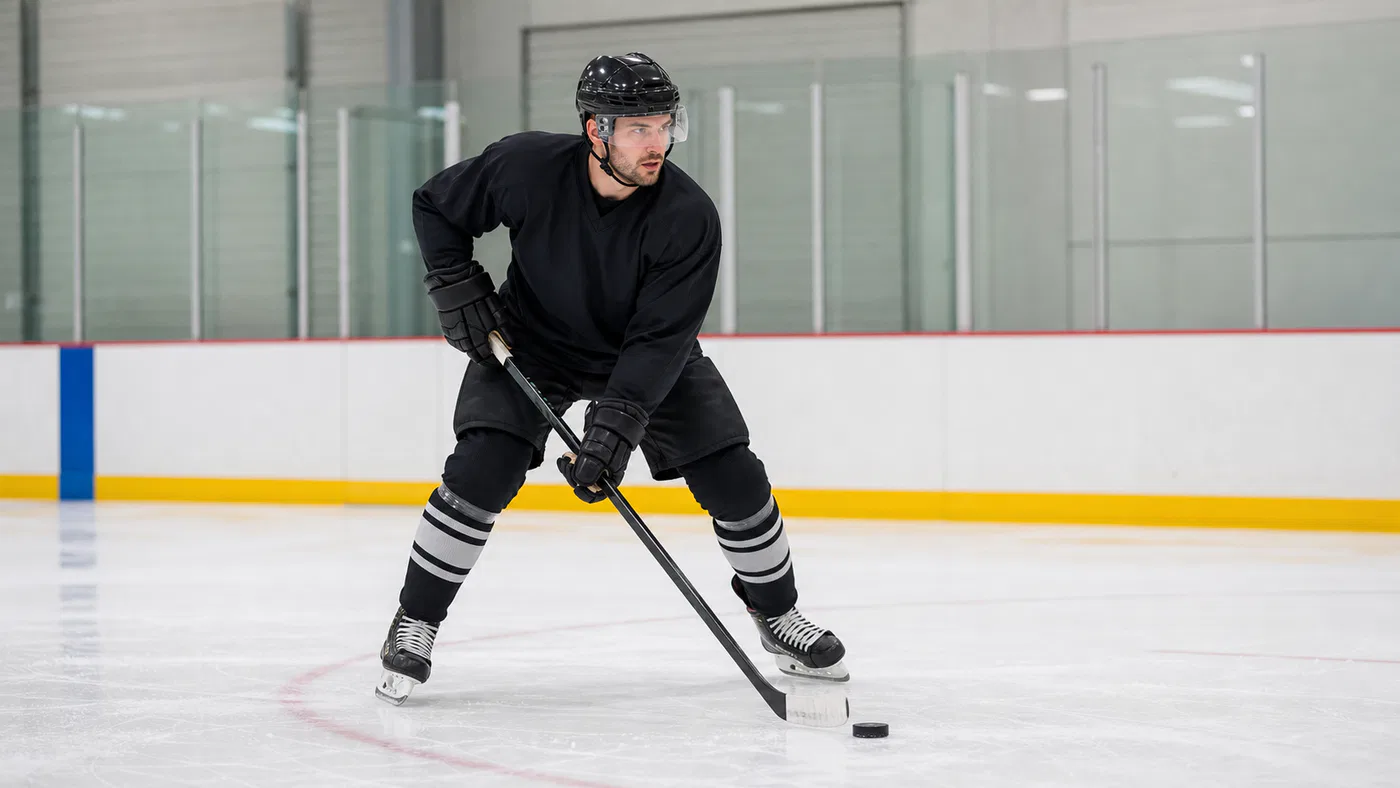
Step 1
Hands apart
Do this: Set the hands apart with the top hand guiding the stick and the lower hand relaxed enough to slide. Keep the gap wide enough to control the blade without locking the wrists. Check it: You should be able to move the puck side to side while the shoulders stay relaxed and the blade stays flat.
Why it works: Good hand spacing gives puck feel, reach, and quick changes without squeezing the stick.
Key cue: Choose the simple hockey option first: protect the puck, make the flat pass, take the open shot, or reset your gap.
Make it harder: Start with slow shadow reps, then add the puck only when setup feels repeatable.
Step 2
Cup puck
Do this: Cup the puck by keeping the puck close, relaxing the controlling surface, and lifting the eyes between touches so the next decision is visible. Check it: Keep rhythm for several touches and glance up without losing the puck.
Why it works: Close control buys time while still protecting the puck from pressure.
Key cue: Choose the simple hockey option first: protect the puck, make the flat pass, take the open shot, or reset your gap.
Make it harder: Start with slow shadow reps, then add the puck only when setup feels repeatable.
Step 3
Use soft taps
Do this: Use soft taps by keeping the puck close, relaxing the controlling surface, and lifting the eyes between touches so the next decision is visible. Check it: Keep rhythm for several touches and glance up without losing the puck.
Why it works: Close control buys time while still protecting the puck from pressure.
Key cue: Choose the simple hockey option first: protect the puck, make the flat pass, take the open shot, or reset your gap.
Make it harder: Complete three controlled reps before adding speed, distance, or a smaller target.
Step 4
Look up
Do this: Look up by keeping the puck close, relaxing the controlling surface, and lifting the eyes between touches so the next decision is visible. Check it: Keep rhythm for several touches and glance up without losing the puck.
Why it works: Close control buys time while still protecting the puck from pressure.
Key cue: Choose the simple hockey option first: protect the puck, make the flat pass, take the open shot, or reset your gap.
Make it harder: Complete three controlled reps before adding speed, distance, or a smaller target.
Step 5
Test at low speed
Do this: Test at low speed by keeping the puck close, relaxing the controlling surface, and lifting the eyes between touches so the next decision is visible. Check it: Keep rhythm for several touches and glance up without losing the puck.
Why it works: Close control buys time while still protecting the puck from pressure.
Key cue: Choose the simple hockey option first: protect the puck, make the flat pass, take the open shot, or reset your gap.
Make it harder: Complete three controlled reps before adding speed, distance, or a smaller target.